



You pull your favourite winter coat out of the wardrobe, ready for another cold morning in Abingdon, only to notice a mark on the sleeve, a musty smell or a collar that doesn’t look quite as fresh as it did last year.
The first thought is often to put it in the washing machine. But what if that wool coat shrinks, the lining starts to bunch up or the shoulders lose their shape?
Winter coat dry cleaning can be a sensible option for delicate or structured outerwear, but it isn’t the right treatment for every jacket. Some coats need professional dry cleaning, while others can be washed safely at home if their care labels allow it.
The trick is knowing which is which.
In this guide, we’ll explain how to clean different winter coat materials, what to do about common stains and how to keep your outerwear looking good throughout the colder months.
Quick answer: You can dry clean many wool, cashmere and tailored winter coats if their care labels permit it. However, down jackets, synthetic puffers, waterproof coats and waxed jackets may need different cleaning methods. Always check the label before choosing a treatment.
If your coat needs professional attention, Abingdon Dry Cleaners can assess its fabric, condition and cleaning requirements.
No. Different winter coats need different cleaning methods, even when they look similar from the outside.
For example, a traditional wool overcoat usually has several layers of material, including an outer fabric, lining and internal structure. Washing it at home may affect how those layers sit together.
A lightweight polyester coat might have a much simpler construction and could be machine-washable.
A down-filled jacket is different again. Its insulation needs particular attention during washing and drying to prevent clumping and uneven filling.
Before cleaning any coat, look at three things: the outer material, the lining or filling, and the manufacturer’s care instructions.
Here’s a practical overview.
| Winter coat type | Recommended approach |
|---|---|
| Wool overcoat | Professional dry cleaning if specified on the label |
| Cashmere coat | Follow the label; many structured styles need specialist care |
| Tailored or lined coat | Professional assessment, particularly if washing is prohibited |
| Down-filled puffer jacket | Often washable with appropriate drying, if permitted |
| Synthetic padded coat | Frequently machine-washable, depending on construction |
| Leather or suede coat | Specialist leather or suede cleaning |
| Waxed cotton jacket | Manufacturer-approved cleaning and re-waxing |
| Waterproof technical jacket | Follow the manufacturer’s technical washing instructions |
This doesn’t mean every wool coat must be dry cleaned or every padded jacket should be machine-washed. The care label always takes priority over general advice.
Wool and cashmere are popular winter fabrics because they provide warmth without necessarily requiring heavy padding. However, both can be affected by unsuitable washing and drying.
Wool fibres can felt and shrink when exposed to the wrong combination of moisture, heat and agitation.
Imagine putting a beautifully fitted wool overcoat into a standard wash and finding that the sleeves feel shorter afterwards. Even if the fabric remains clean, the coat may no longer fit comfortably.
Structured coats present another problem. The outer fabric, internal supports and lining may react differently to water, causing puckering or a change in shape.
If the label says dry clean only, avoid experimenting with home washing.
Some modern wool garments are specifically designed to be washable. When the manufacturer permits it, follow the stated cycle, temperature and drying instructions rather than assuming all wool behaves alike.
Many cashmere coats are suitable for professional dry cleaning, but that decision should be based on the care label and the garment’s construction.
Cashmere feels soft because of its fine fibres. Aggressive brushing, excessive friction and unsuitable stain treatments can disturb its surface.
If your cashmere coat has a noticeable stain, resist the urge to scrub it with washing-up liquid or a household cleaner. You could remove the mark while leaving a different-looking patch behind.
Instead, ask a professional cleaner to assess the fabric and the stain.
For delicate wool and cashmere garments, professional dry cleaning in Abingdon provides an option when home washing is unsuitable.
Not automatically.
A common misconception is that every expensive winter jacket needs dry cleaning. In reality, many down-filled and synthetic puffer jackets are designed to be washed rather than dry cleaned.
Down insulation can lose some of its loft when cleaned with an unsuitable process. Certain dry-cleaning treatments may also be inappropriate for the filling or outer material.
If the manufacturer allows machine washing, the jacket may need a specialist detergent, a gentle programme and careful drying to restore the filling evenly.
Getting it properly dry is especially important. Damp filling can clump together, develop unpleasant odours and reduce the jacket’s insulating performance.
Synthetic padded coats may be easier to care for, although their outer materials and special finishes still need attention.
What if the jacket says dry clean only? Don’t ignore the label. Ask a professional cleaner to check the filling, shell fabric and trims before deciding on the appropriate treatment.
We already cover this subject in more detail in our guide to washing or dry cleaning a puffer jacket in Abingdon, including washing precautions and common problems with padded jackets.
Winter coats pick up all sorts of marks during everyday wear.
A splash of coffee on the way to work, mud around the hem after a walk or make-up along the collar might seem harmless at first. Unfortunately, using the wrong cleaning product can make a small stain more difficult to treat.
The safest approach depends on what caused the stain and what the coat is made from.
If you spill a drink on your coat, gently blot any excess liquid with a clean, absorbent cloth.
Avoid rubbing the stain into the fibres.
On washable fabrics, an appropriate stain treatment may help, provided the garment’s care instructions allow it. Always test a product on a hidden area first.
For wool, cashmere or a dry-clean-only coat, professional stain assessment is generally the safer option.
If the mark is ordinary surface mud, allow it to dry before trying to remove it.
Once dry, you may be able to lift loose dirt gently with a suitable soft clothes brush.
Don’t scrub the fabric or apply excessive moisture.
If a mark remains after brushing, stop before you damage the surface.
Oily marks can be particularly difficult because they may spread when rubbed.
Avoid pouring water onto a grease stain or using strong household products without checking whether they are suitable.
Tell your cleaner what caused the mark and whether you have already tried treating it. This information can help them choose an appropriate method.
If you’re dealing with a stubborn stain, our professional stain removal service in Abingdon can assess suitable treatment options.
Remember that no cleaning method can guarantee complete stain removal. Some marks permanently alter fibres or dyes.
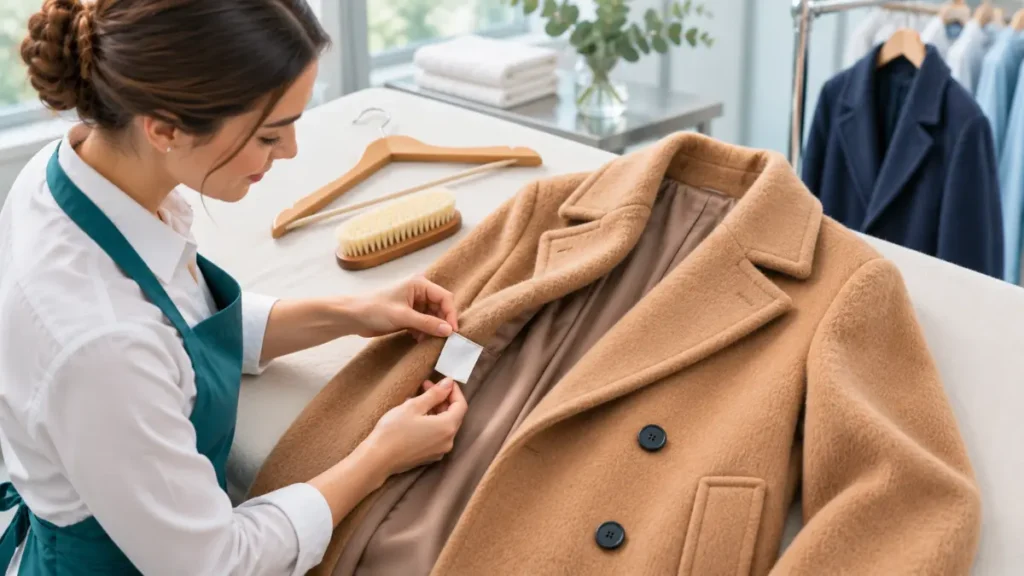
There isn’t a universal rule saying winter coats must be dry cleaned every month or after a particular number of wears.
How often your coat needs cleaning depends on how you use it.
If you wear the same wool coat every day for commuting, it will probably collect more dirt, body oils and environmental residue than a formal coat worn occasionally.
A coat worn over clean layers and stored properly between uses may need less frequent full cleaning.
Rather than following a rigid timetable, look for signs that attention is needed.
These include visible marks around the collar and cuffs, persistent odours, noticeable dirt or a coat that no longer feels fresh after airing.
For many people, having an appropriate clean before seasonal storage is a practical routine. However, obvious stains should be dealt with sooner rather than left for several months.
Sometimes.
If the coat isn’t stained and simply needs refreshing, hanging it in a dry, well-ventilated room may help remove everyday odours.
A suitable clothes brush can also remove surface dust from many wool coats.
Avoid spraying large amounts of perfume or fabric freshener directly onto delicate materials. These products can leave residues or marks, and they don’t remove the underlying dirt.
Most coat-care problems start with perfectly understandable decisions.
You notice a stain, want it gone quickly and try whatever cleaning method seems convenient. Unfortunately, the wrong treatment can create a bigger problem than the original mark.
Here are some mistakes worth avoiding.
It might be tempting to assume that a coat can survive a gentle wash because another similar-looking garment did.
However, one coat may have washable lining and construction while another contains delicate internal materials.
Always read the label first.
Hot water is not a universal stain-removal solution.
Depending on the stain and fabric, heat may make a mark harder to remove or affect the garment itself.
If you’re unsure what caused a stain, avoid applying heat before getting advice.
Unsuitable heat and agitation can cause wool to shrink or felt.
Follow the manufacturer’s drying instructions carefully, especially for coats with wool-rich fabrics or delicate linings.
Vinegar, bicarbonate of soda and washing-up liquid are often suggested online as universal cleaning solutions.
However, a product that works on one washable textile may affect the colour, finish or feel of another.
Be especially cautious with cashmere, suede, leather and coated fabrics.
Waxed cotton is designed with a special finish.
Standard washing or dry cleaning may damage or remove that finish, depending on the garment.
Many waxed jackets require manufacturer-approved surface cleaning and occasional re-waxing rather than conventional dry cleaning.
Even a clean coat can develop unpleasant odours if stored with trapped moisture.
Make sure the garment is completely dry before placing it in a wardrobe or storage bag.
Good storage makes a noticeable difference, particularly when you own a coat you want to wear for several winters.
Start by checking it for stains or dirt before packing it away. Marks that sit on fabric for months may become harder to treat.
Once the coat is clean and dry, choose storage that supports its shape.
A sturdy, appropriately sized hanger is helpful for structured overcoats, as it supports the shoulders rather than leaving them stretched or distorted.
Breathable garment covers can protect suitable coats from dust without sealing in moisture. Avoid leaving clothing tightly wrapped in the thin plastic sometimes used for transportation from a dry cleaner.
Make sure the wardrobe is dry and has enough space for air to circulate.
Down and padded jackets should not be compressed tightly for long periods because prolonged compression may affect their loft.
For wool coats, regular inspection is worthwhile. Clothes moths can damage natural fibres, particularly when garments are stored undisturbed.
A little care at the end of winter can save you from discovering unwanted damage when the cold weather returns.
That depends on the coat.
If you own a simple machine-washable polyester jacket, professional dry cleaning may offer little advantage over correctly following the manufacturer’s washing instructions.
However, the decision changes when you’re dealing with a tailored wool coat, a cashmere overcoat or a garment with delicate lining and detailing.
In those cases, the cost of an unsuitable home wash can be considerably greater than the cost of appropriate professional care.
It is also worth considering the value of the coat to you.
An old favourite that fits perfectly may be difficult to replace, even if it wasn’t especially expensive when you bought it.
A professional cleaner can inspect the garment and recommend a cleaning method appropriate to its fabric and construction.
Pricing depends on factors such as the fabric, garment length, construction, lining and the treatment required.
For example, cleaning a straightforward wool coat may be different from treating a heavily embellished overcoat or one with difficult stains.
The best way to get an accurate price is to ask for a quote based on your particular garment.
At Abingdon Dry Cleaners, customers can enquire about cleaning requirements before deciding how to proceed.

If your favourite coat needs attention, Abingdon Dry Cleaners provides professional garment care from its location in East St Helen Street.
Our services cover suitable coats, suits, dresses, wool garments and other clothing that may need more careful treatment than ordinary home washing.
Before cleaning, the garment is assessed to help determine the appropriate care method. This is particularly important for structured coats, delicate materials and items with stains or decorative details.
If your winter coat has a missing care label, unusual fabric or previous damage, tell the team before arranging cleaning.
You can also enquire about associated garment-care services if your coat needs more than cleaning.
Visit Abingdon Dry Cleaners
11–15 East St Helen Street, Abingdon, Oxfordshire, OX14 5EE
Call: 01235 798 287
Email: info@abingdondrycleaners.co.uk
Explore our professional dry cleaning service
A good winter coat should keep you comfortable through cold mornings, rainy afternoons and countless journeys around Abingdon.
Taking care of it doesn’t need to be complicated.
Check the label, tackle stains carefully, avoid unsuitable washing methods and store it properly when the season ends.
Most importantly, remember that not every coat needs the same treatment. Some are perfectly suitable for home washing, while others benefit from professional attention.
If you’re unsure about winter coat dry cleaning, bring your garment to Abingdon Dry Cleaners for an assessment.
We’ll help you understand the available cleaning options so you can make an informed decision before proceeding.
Have a wool coat, cashmere overcoat or winter jacket that needs attention? Call 01235 798 287 or visit our Abingdon shop to enquire about professional cleaning.
Yes, many winter coats can be professionally dry cleaned, particularly wool and structured styles. However, the correct cleaning method depends on the care label, fabric, filling and garment construction. Some padded and technical jackets need specialist washing instead.
If the label specifies dry cleaning, professional care is the appropriate option. Some wool garments are washable, but structured coats may contain linings and internal materials that make home washing unsuitable.
Professional cleaning reduces certain risks associated with unsuitable home washing, but no cleaning process is completely risk-free. Fabric condition, garment construction and previous treatment can affect the result. Always disclose existing damage or shrinkage concerns.
Only if the manufacturer’s care instructions expressly permit it. Many structured cashmere coats require professional care because washing may affect the material, lining or shape.
Professional stain treatment may remove or reduce coffee marks, depending on the fabric, stain age and previous cleaning attempts. Complete removal cannot be guaranteed, particularly if the mark has affected the dye or fibres.
It depends on the individual jacket’s care instructions. Many branded down or synthetic jackets are designed for washing rather than conventional dry cleaning. Check the specific product’s label and manufacturer guidance.
Turnaround varies according to the coat’s material, condition and any additional stain treatment required. Contact Abingdon Dry Cleaners for availability and a realistic collection date.
Some coats have removable trims that require separate treatment. Faux fur, real fur and other decorative materials may need specialist cleaning. Check the garment’s care label and ask for an assessment before proceeding.
Yes, it is sensible to put away a coat that is clean and completely dry. This helps avoid leaving dirt, stains and moisture in the fabric throughout the warmer months.
Abingdon Dry Cleaners is located at 11–15 East St Helen Street, Abingdon, OX14 5EE. Contact the team on 01235 798 287 to discuss your coat’s material, condition and cleaning requirements.